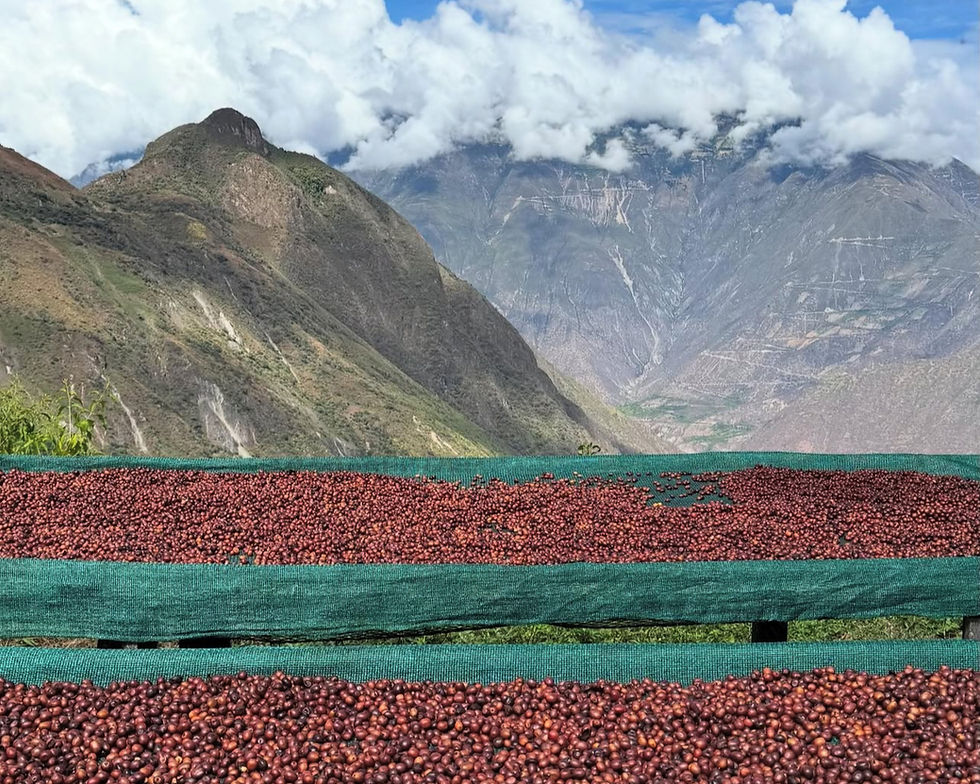
José Angelino Landaverde has a 8-manzana farm, which has about 5 manzanas planted with coffee. Once the coffee is picked and depulped immediately, he ferments it in tanks for 14 hours, then washes the coffee and places it on raised beds or patios to dry for 10–15 days. The coffee is rotated every 15 minutes for the first few days until it becomes more moisture-stable, then every 30 minutes for the duration of the drying period.
Known as “the land of volcanoes,” El Salvador is the smallest Central American country (roughly the same size as New Jersey), but its reputation among specialty-coffee-growing regions has grown larger-than-life, especially since the early 2000s. While coffee was planted and cultivated here mostly for domestic consumption starting in the mid-1700s, it became a stable and significant crop over the next 100 years, notably increasing in national importance during the late 1800s, when the country’s indigo exports were threatened by the development and widespread marketability of synthetic dyes. As coffee grew in economic importance, different government programs designed to increase production through land, tax, and militaryexemption incentives created a small but strong network of wealthy landowners who gained control over the coffee market, in
addition to the individual smallholders who were growing coffee as part of their subsistence farming and would sell their cherry to the larger estates or mills. By the late 1970s, coffee exports accounted for 50 percent of the GDP, but socioeconomic and political unrest hurled the country into civil war for more than a decade, and in the 1980s various land-redistribution projects and agrarian reform disjointed the coffee industry and caused the market to decline. Lacking the resources to continue farming, producers abandoned their coffee farms, and many were left overgrown and unharvested for years until a peace agreement was reached in the 1990s.It is often said that the Cup of Excellence competition, which came to El Salvador in 2003, was the beginning of the new “wave” of interest in Salvadoran coffee, shining the first light on some of the special varieties the small country grows.
Origin: El Salvador Region: Chalatenango
Farm: Finca El Cedro
Elevation: 1,200-1,800 meters
Variety: Gesha Process: Natural
Notes: Caramel, Vanilla, Berry, Melon, Mandarin